
Kitten Care
Bringing a Kitten Home Checklist
Published September 28, 2026 | Last updated October 8, 2026
Key Takeaways
- Prepare a single safe, quiet room for your kitten's first few days.
- Have food, litter, bowls, a carrier, a bed, and toys ready before arrival.
- Ask what food and litter the kitten is used to and transition gradually.
- Keep the kitten in one room until it is confident, then expand access.
- Book a veterinary visit in the first week to establish care.
Before Your Kitten Arrives
The best arrival starts before your kitten comes home. Gather supplies, set up a safe room, and confirm the food and litter your kitten is used to so you can match them on day one.
Ask your cattery what food and litter the kitten is currently eating and using. Matching these for the first weeks reduces stress and helps your kitten settle.
The Safe Room
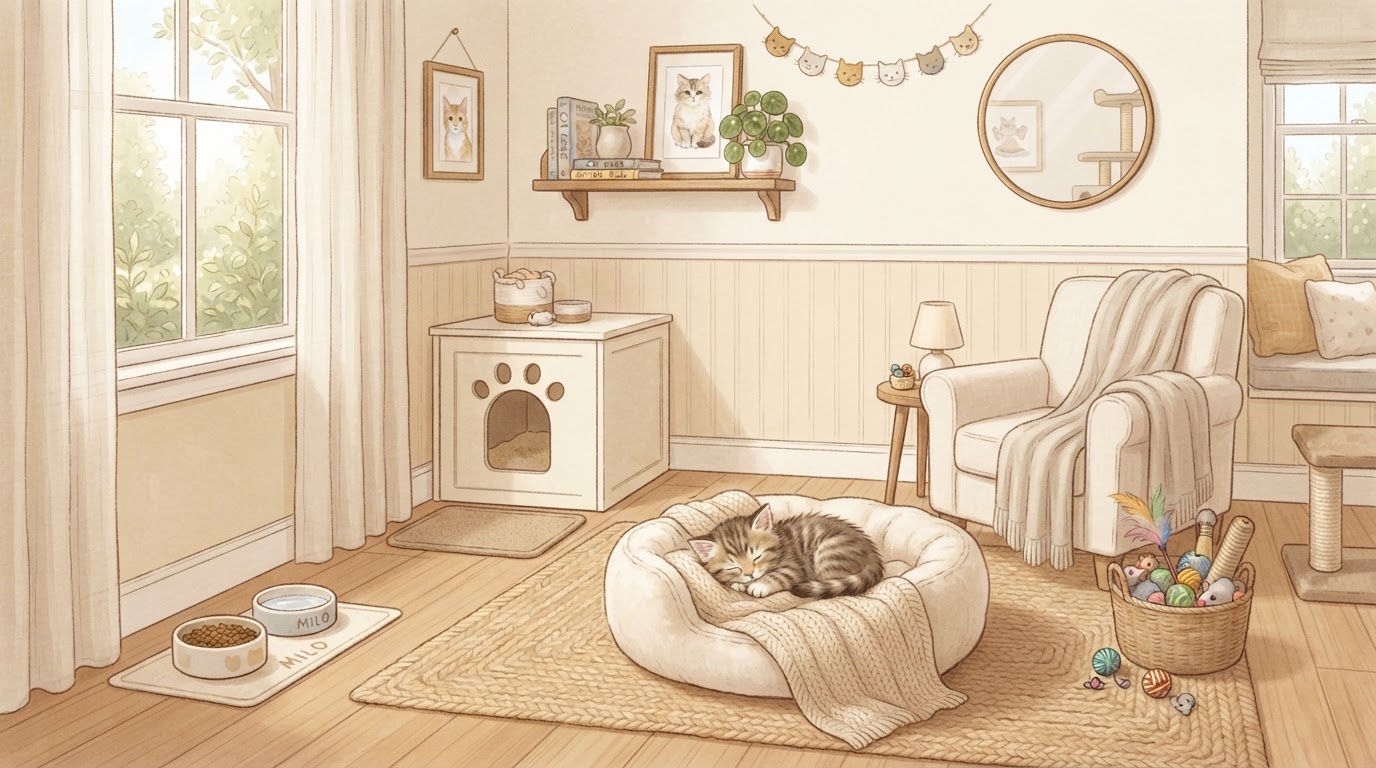
Choose one quiet room for your kitten's first few days. Include food, water, a litter box, a bed, and a few toys. Keep the door closed so your kitten can explore a small space confidently.
A smaller space helps a kitten feel secure. Expand access to the rest of the home once your kitten is confident and using the litter box reliably.
Supplies to Have Ready
Use this checklist to prepare before your kitten arrives:
- The food your kitten is currently eating, plus bowls.
- The litter your kitten is used to, plus a low-entry litter box.
- A secure carrier for travel and vet trips.
- A cozy bed in a quiet corner.
- A scratcher and a few safe toys.
- Basic grooming supplies, a comb and nail clippers.
- Kitten-proofing: secure cords, remove toxic plants, and block small gaps.
Ready to find your kitten?
Ask About a KittenThe First Day
Open the carrier in the safe room and let your kitten come out on its own. Keep the room calm and quiet, and let your kitten explore at its own pace.
Show your kitten where the food, water, and litter box are. Offer the same food and litter the kitten is used to. Avoid overwhelming your kitten with too many people or pets on day one.
The First Week
Over the first week, spend calm, gentle time with your kitten and build a routine around meals and play. Book a veterinary visit in the first week to establish care and confirm the health records that came with your kitten.
If you transition food or litter, do it gradually over a week or more. See our recommended products for kitten food and litter options families consider useful.
The Luxury Only Kittens Team
A boutique cattery founded in 2020, placing health screened purebred kittens with carefully selected families and personally delivering kittens across the United States.
Frequently Asked Questions
- What room should a new kitten stay in first?
- Start with one quiet, kitten-safe room that has food, water, a litter box, a bed, and toys. Keep the door closed until your kitten is confident, then expand access.
- Should I change my kitten's food on day one?
- No. Feed the food your kitten is used to for the first weeks. If you want to change foods, transition gradually over a week or more to avoid stomach upset.
- How soon should a new kitten see a vet?
- Book a veterinary visit in the first week to establish care, confirm the health and vaccination records that came with your kitten, and plan the next steps.
- How many litter boxes should I have for a kitten?
- A general rule is one litter box per cat plus one. For a single kitten, two boxes in different spots give your kitten options and reduce accidents.
Ask About a Kitten
Tell us what you're looking for and we'll share available kittens, photos, and health records.